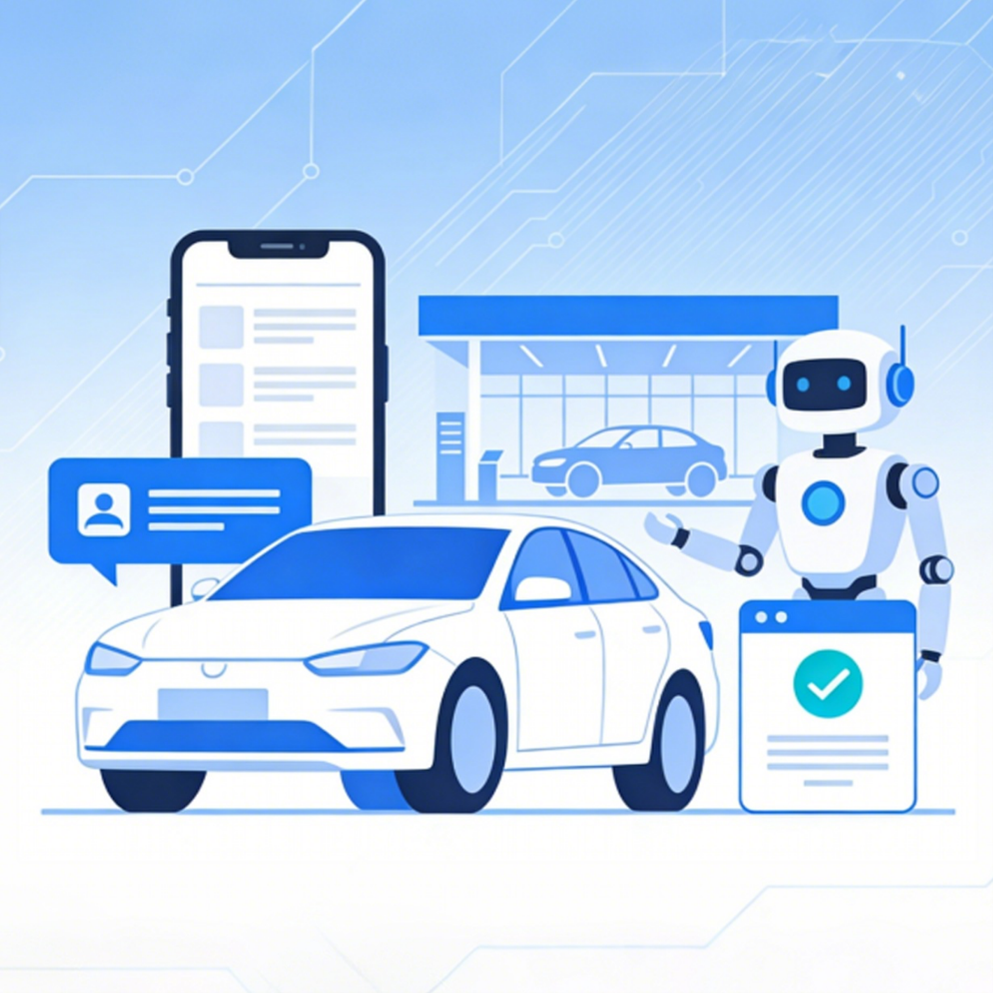
55% to 92%: How Voicebot Fixes Car After-Sales Service
In today’s very competitive car market, after-sales follow-up is not optional—it’s a must. It keeps customers coming back, builds a good brand name, and drives repeat sales. But most car dealers face a big problem: they can’t reach enough customers, and satisfaction rates stay low.
One top car brand had this exact issue. For months, their after-sales follow-up coverage stayed at 55%. Customers who got repairs or maintenance often heard nothing from the dealership afterward. Complaints about “slow service” piled up, and fewer people bought cars again—until they started using Voicebot. In just 30 days, their coverage rate jumped to 92%, and customer satisfaction rose by 18%. Here’s how they did it.
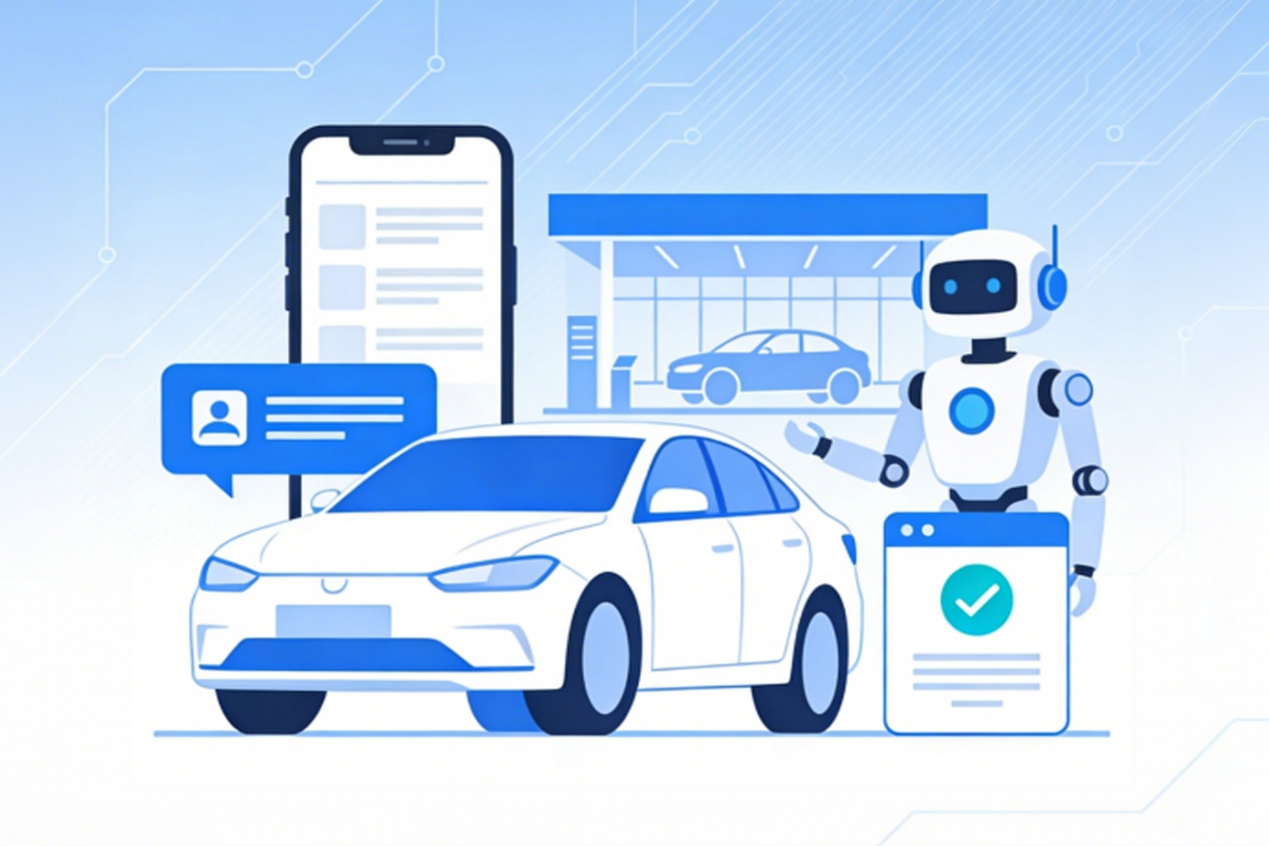
The Big Problems They Faced
Problem 1: Too Few Customers Reached, Too Slow
The brand had millions of customers. Each dealership used 15–20 people to make follow-up calls by hand. This team was too small to reach everyone. Human agents only worked daytime hours, so they missed customers who were free in the evenings or on weekends. Without smart scheduling, agents often called the same person twice or missed important contacts. That’s why coverage never went above 55%.
Problem 2: High Costs, Inconsistent Service
Each major location spent over $1.2 million a year on call teams. But service quality was hit-or-miss. Some agents were tired or inexperienced, so they rushed through calls. They skipped key questions about how happy customers were with repairs. Others didn’t know enough about car maintenance to answer questions. This frustrated customers and led to more complaints.
Problem 3: No Second Chances, Lost Feedback
If a customer didn’t answer, busy agents rarely called back. When they did, they often called at bad times—right away or late at night. All customers got the same generic script, which didn’t work for first-time buyers or long-term owners. This created a cycle: high costs, low efficiency, and unhappy customers.
Industry data shows that most local dealers have only 62% after-sales satisfaction. 30% of complaints are about slow responses, and 25% blame poor communication.
The Fix: Two Simple Changes
The brand rolled out Voicebot, an automated calling tool. It focused on auto-scheduling and smart retries—no extra staff needed.
Fix 1: Auto-Scheduled Calls
Voicebot connected directly to the dealership’s customer system. It automatically made calls based on service milestones:
· 3 days after maintenance
· 7 days after a repair
· 10 days before the first required service
· Smart Timing: AI picked the best times to call (7–8 PM on weekdays, weekends). This made answer rates 40% higher.
· Scale: It could make calls 24/7, 5–8 times more calls per day than human teams.
· Personalization: It grouped customers into types (first service, long-term owners, at-risk) and used tailored scripts for each group.
Fix 2: Smart Call Retries
Voicebot stopped the “call once and forget” mistake. It used custom rules for follow-ups:
· If busy: Call back in 1 hour
· If no answer: Try again that evening and the next morning
· If phone is off: Retry after 24 hours (max 3 tries)
· If unreachable: Flag for a human agent to follow up with a text, then a call
· Full Tracking: Real-time dashboards showed all attempts, so no duplicates or gaps.
The Results: 30 Days Later
· Coverage: 55% → 92%
Auto-scheduling and smart retries meant 92% of customers got a follow-up call. This made customers feel more cared for.
· Satisfaction: Up 18%
Standardized scripts and AI sentiment checks eliminated human errors. Complaints dropped 65%, and satisfaction rose from 72% to 90%.
· Efficiency: 50% Cost Cut, 4x Faster
Voicebot handled 90% of routine calls. Human agents were free to fix complaints or sell extra services. Team sizes were cut in half, saving $600,000+ a year. Overall efficiency went up 400%.
Why This Matters Now
In crowded car markets, after-sales service is where loyalty is won. Voicebot isn’t a future idea—it’s a tool you can use today to run your business better.
This plan works. It’s easy to copy and use for any car brand or dealer network. No technical skills are needed.
If you’re struggling to reach customers, control costs, or keep people happy, Voicebot can help. The same system that turned this brand’s results around is available now—with custom setup, industry-specific tweaks, and hands-on support.
The future of car customer service is automated, personalized, and here today.
Share This Article


Instadesk
Instadesk official
You may also like

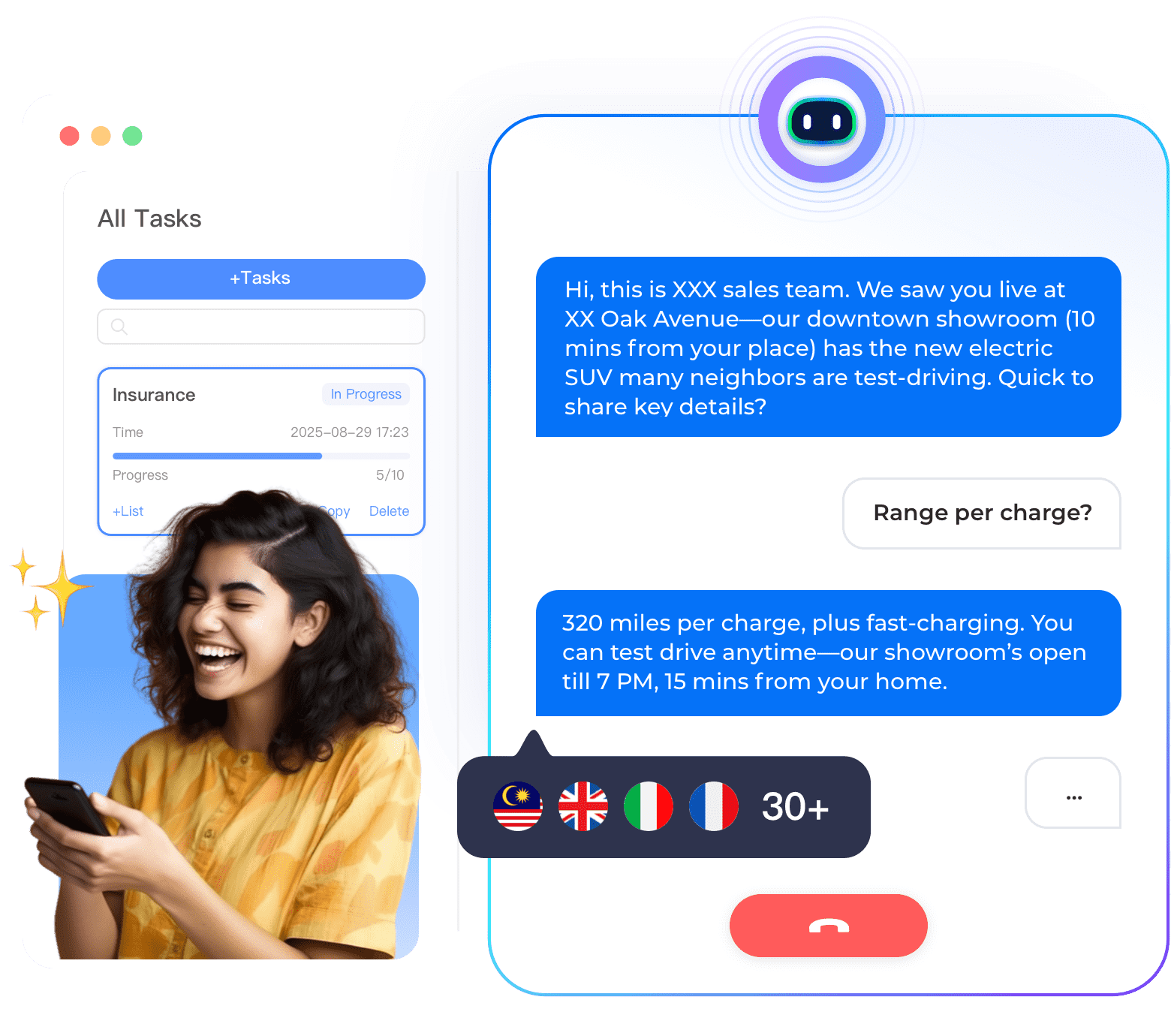
Outbound Robot for Insurance Telemarketing:A Guide for Insurers
Insurance telemarketing involves high-volume outbound calls to prospects for policy sales,lead qualification,and appointment setting.An outbound robot—an AI-powered voicebot—automates these calls,engaging prospects in natural conversations,addressing objections,and scheduling follow-ups.Unlike human agents,who can only make a limited number of calls per day,outbound robots can handle thousands of calls simultaneously,reducing the cost per lead and improving conversion rates.This article explores how insurers can use outbound robots for telemarketing,their benefits over manual calling,and how Instadesk’s VoiceBot platform delivers compliant,effective outbound automation.


Voice Bot with Data Encryption:A Guide for Fintech Companies
Fintech companies handle sensitive customer data—account numbers,transaction histories,credit scores,and personal identifiers.A voice bot with data encryption ensures that all customer conversations and data exchanges are protected from unauthorized access.Unlike standard voice bots that may store or transmit data insecurely,encrypted voice bots use advanced encryption standards(AES)for data at rest and Transport Layer Security(TLS)for data in transit,meeting financial industry compliance requirements.This article explores the importance of encryption in voice bots,how encrypted voice bots differ from standard ones,and how Instadesk’s VoiceBot platform delivers bank-grade security for fintech applications.


VoiceBot Inbound Call: A Guide for Property Management Companies
Property management companies handle thousands of inbound calls from tenants,landlords,and vendors—including maintenance requests,rent inquiries,lease questions,and emergency reports.An inbound VoiceBot system automates these routine interactions,providing 24/7 service while reducing agent workload.Unlike traditional IVR menus that frustrate callers,AI-powered voicebots understand natural language,answer questions,and even create maintenance tickets automatically.This article explores how property management companies can leverage inbound voicebots,their advantages over traditional systems,and how Instadesk’s Inbound Voicebot platform delivers efficient,tenant-friendly automation.
Get Started in Minutes. Experience the Difference.