Key Trends in Intelligent Outbound Communication for 2026
As customer expectations grow more personalized and globalized, intelligent outbound communication has evolved far beyond repetitive manual calls and rigid scripted bots. For call centers, sales teams, and customer service departments across industries, 2026 brings a shift toward smarter, more natural, and operationally efficient outbound strategies that address real-world business pain points—from high labor costs and slow deployment to inconsistent cross-border customer experiences. Below are the defining trends shaping intelligent outbound communication this year.

1. Large-Model AI Enables Natural Multi-Turn Conversations
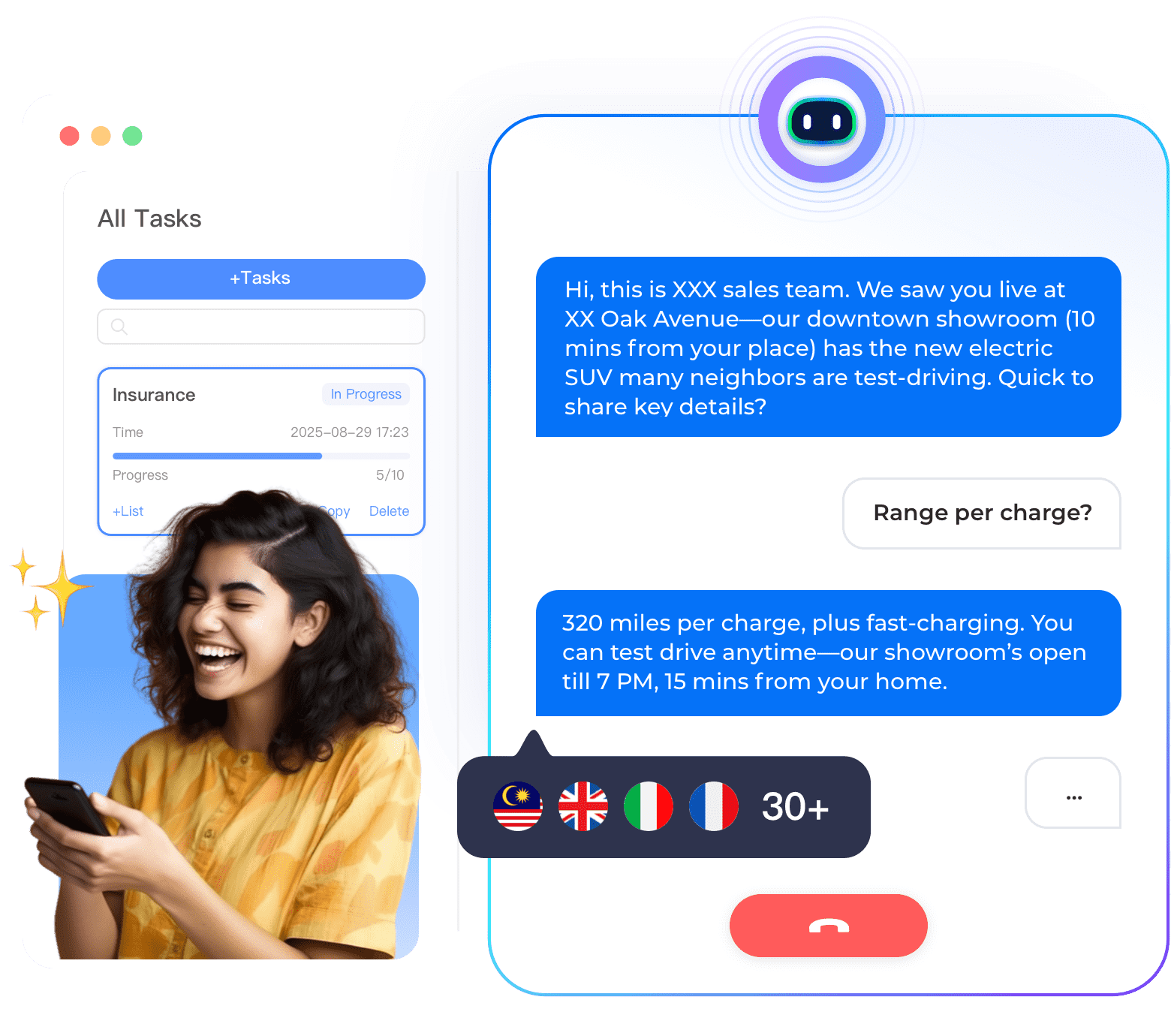
Rule-based outbound tools, limited to fixed scripts and basic responses, are being replaced by large-language-model powered voice agents. These systems grasp nuanced customer intent, support fluid multi-round dialogues, and respond to interruptions naturally, avoiding the robotic interactions that often drive customers to hang up early. This move toward context-aware communication helps brands turn one-way notifications into genuine conversations, improving both engagement and outcomes.
2. Multilingual Support Becomes a Core Requirement for Global Outreach
In an increasingly connected business landscape, multilingual capability is no longer optional. Modern outbound solutions support bilingual and multi-language recognition, adapting to local speech habits to ensure clarity and relevance across regions. This is especially valuable for businesses operating in multilingual markets, allowing consistent, respectful communication without heavy additional setup or linguistic expertise.
3. Zero-Code Orchestration Speeds Up Deployment and Reduces Cold-Start Costs
A major trend in 2026 is the widespread use of zero-code, visual workflow design for outbound systems. Teams can build, adjust, and launch intelligent outbound campaigns quickly without complex technical work, significantly lowering initial setup costs and accelerating time-to-market. This accessibility makes advanced outbound automation feasible for businesses of all sizes, not just large enterprises with dedicated engineering teams.
4. Humanized Voice Interactions Improve Customer Experience
Today’s intelligent outbound tools prioritize natural, human-like voice delivery and responsive conversation design. Features such as quick interruption handling and emotionally consistent voice tone help automated calls feel less transactional, leading to longer, more productive interactions. This focus on experience is particularly valuable for reminder, follow-up, and after-sales survey use cases across retail, healthcare, and financial services.
5. Tighter CRM Integration Creates Closed-Loop Outbound Workflows
Data connectivity is central to modern outbound strategy. Leading systems sync smoothly with CRM platforms, automatically tagging conversation details, extracting customer intent, and routing leads to appropriate teams. This integration reduces manual work, speeds up follow-ups, and ensures outbound efforts align with overall customer relationship management—turning call data into actionable business value.
Wrapping Up
The 2026 landscape of intelligent outbound communication emphasizes balance: scaling efficiency while keeping interactions human, expanding global reach without added complexity, and automating repetitive work to free teams for high-value tasks. Businesses that adopt these trends can streamline operations, lower unnecessary costs, and build more consistent, customer-centric outreach.
For organizations looking to put these trends into practice, Instadesk offers enterprise-grade VoiceBot solutions built on large-model AI, multilingual support, and zero-code orchestration—designed to help teams launch smarter outbound workflows while keeping customer interactions natural and effective.
Share This Article


Chris
Senior Customer Service Operations Analyst
You may also like

Outbound Robot for Insurance Telemarketing:A Guide for Insurers
Insurance telemarketing involves high-volume outbound calls to prospects for policy sales,lead qualification,and appointment setting.An outbound robot—an AI-powered voicebot—automates these calls,engaging prospects in natural conversations,addressing objections,and scheduling follow-ups.Unlike human agents,who can only make a limited number of calls per day,outbound robots can handle thousands of calls simultaneously,reducing the cost per lead and improving conversion rates.This article explores how insurers can use outbound robots for telemarketing,their benefits over manual calling,and how Instadesk’s VoiceBot platform delivers compliant,effective outbound automation.


Voice Bot with Data Encryption:A Guide for Fintech Companies
Fintech companies handle sensitive customer data—account numbers,transaction histories,credit scores,and personal identifiers.A voice bot with data encryption ensures that all customer conversations and data exchanges are protected from unauthorized access.Unlike standard voice bots that may store or transmit data insecurely,encrypted voice bots use advanced encryption standards(AES)for data at rest and Transport Layer Security(TLS)for data in transit,meeting financial industry compliance requirements.This article explores the importance of encryption in voice bots,how encrypted voice bots differ from standard ones,and how Instadesk’s VoiceBot platform delivers bank-grade security for fintech applications.


VoiceBot Inbound Call: A Guide for Property Management Companies
Property management companies handle thousands of inbound calls from tenants,landlords,and vendors—including maintenance requests,rent inquiries,lease questions,and emergency reports.An inbound VoiceBot system automates these routine interactions,providing 24/7 service while reducing agent workload.Unlike traditional IVR menus that frustrate callers,AI-powered voicebots understand natural language,answer questions,and even create maintenance tickets automatically.This article explores how property management companies can leverage inbound voicebots,their advantages over traditional systems,and how Instadesk’s Inbound Voicebot platform delivers efficient,tenant-friendly automation.
Get Started in Minutes. Experience the Difference.