From “Months of Development” to “Days to Launch”: The AI Voicebot Deployment Reality
You’ve seen it before. A new AI project gets approved. Requirements are gathered. Development sprints are planned. Months pass. By the time the system goes live, business needs have shifted, competitors have moved, and the initiative that was supposed to be a competitive advantage feels like a compromise.
This is the reality of traditional AI deployments. But it doesn’t have to be. Voicebot technology has changed—and so has the timeline.

The Old Way: Months of Development
Traditional voicebot projects follow a familiar path. Business teams write requirements. Engineering estimates timelines. Development cycles stretch across quarters. Testing reveals gaps. Iteration is slow. Launch is delayed.
The cost isn’t just time. It’s opportunity. Every month spent in development is a month of manual calls, frustrated agents, and missed conversions.
And when the system finally launches, business needs have already changed. New products. New campaigns. New compliance rules. The voicebot that took months to build now needs months more to update.
The New Way: Days to Launch
Modern voicebot platforms are built differently. They’re designed for business teams, not just engineers.
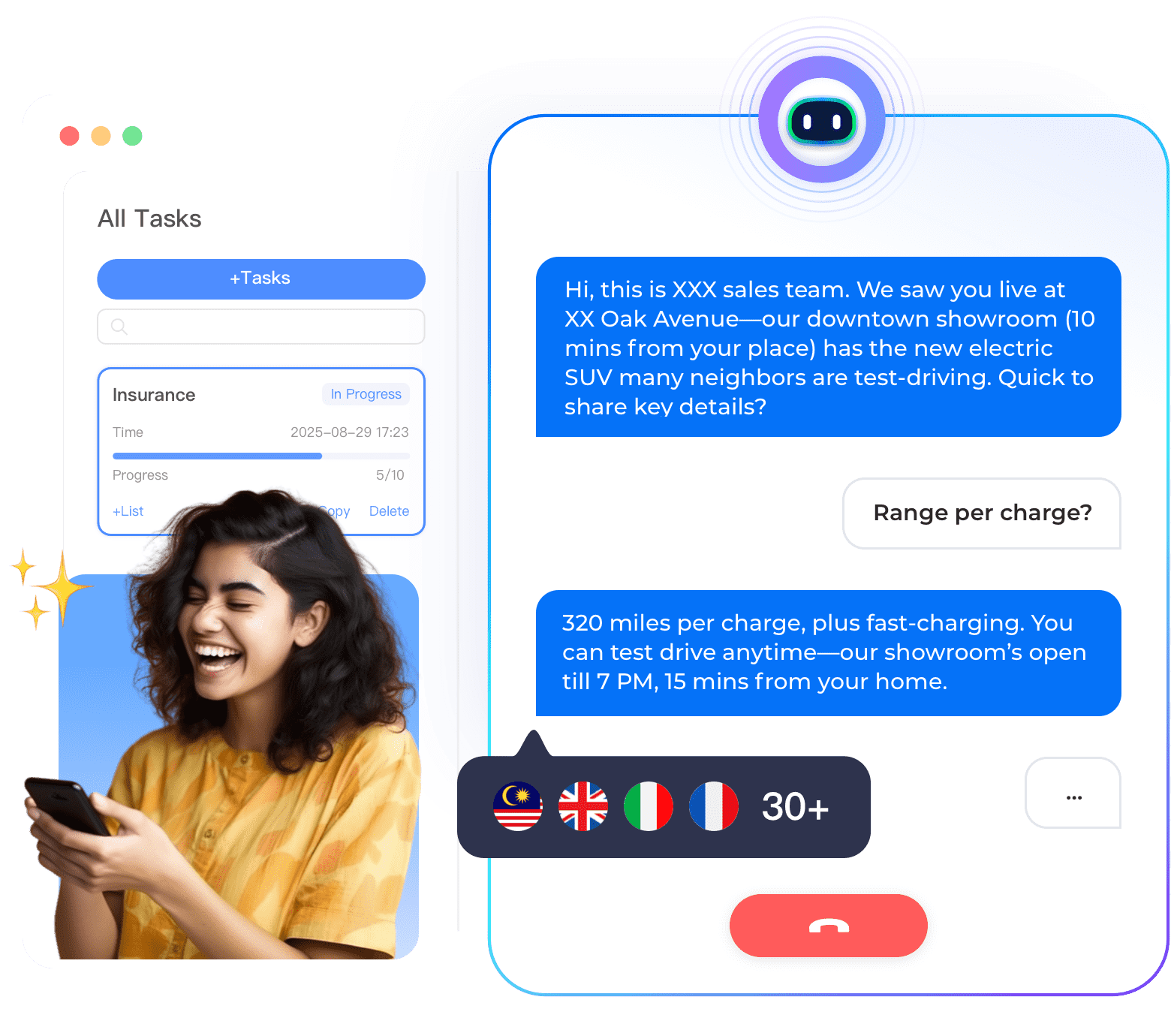
Zero-code visual orchestration. Instead of writing scripts, teams drag and drop conversation flows. Call logic, routing rules, and response structures are assembled visually—like building with blocks. Business analysts, operations managers, and campaign leads can configure bots without waiting for development resources.
Pre-built industry templates. Starting from scratch takes time. Starting from a proven template takes days. Platforms with experience across 40+ industries offer pre-configured templates for manufacturing, e-commerce, finance, and education—ready to deploy and adapt.
One-click testing and tuning. No staging environment required. No complex deployment pipelines. Teams can test campaigns with real recordings, see how the bot performs, and tune on the fly. The result? What once took months now takes days. Launch cycle time decreases by 80%. Script optimization costs drop by 70%.
What Deployment Actually Looks Like
Day 1: Choose your template. A financial services company needs a voicebot for payment reminders. They select a pre-built collections template, already trained on similar scenarios.
Day 2: Configure and connect. The business analyst drags conversation flows, adds company-specific messaging, and connects the bot to the CRM. No code. No developers.
Day 3: Test and tune. The team runs test calls, reviews real-time analytics, and makes adjustments. Intelligent interruption, sentiment detection, and voice emotion are all pre-configured.
Day 4: Go live. The voicebot starts handling outbound calls. Within hours, it’s processing thousands of interactions—automatically tagging conversation content, extracting customer information, and diagnosing abnormal calls for quick tuning.
Day 5: Iterate. Based on early results, the team tweaks scripts and routing rules. Changes deploy instantly. No waiting for the next sprint.
The Business Case for Speed
Speed to deployment matters because business never stops moving.
• Campaign timing. Marketing promotions have fixed dates. A voicebot that launches after the campaign ends is useless.
• Competitive pressure. When competitors deploy AI, every month of delay is lost market share.
• Seasonal peaks. Holiday seasons, tax deadlines, and enrollment periods create predictable volume spikes—but only if your system is ready.
Platforms like Instadesk VoiceBot are built for this reality. Visual orchestration puts control in the hands of business teams. Pre-built templates eliminate starting from zero. And the system learns from every call, improving without constant developer intervention.
The result isn’t just faster deployment. It’s faster iteration. When business changes, the voicebot changes with it—in days, not months.
What Speed Enables
When deployment takes days instead of months, teams can:
• Test new campaigns quickly. Run a pilot for a new product launch, measure results, iterate, and scale—all within a single quarter.
• Respond to market shifts. Competitor launched a promotion? Adjust your outbound messaging next week, not next quarter.
• Adapt to customer feedback. Hear that customers are confused about a new policy? Update the voicebot overnight.
Speed isn’t just about getting to launch faster. It’s about staying ahead once you’re there. The voicebot that deploys in days is the voicebot that can adapt in days—keeping your customer experience sharp while others wait for development cycles.
The New Standard for Deployment
Traditional AI projects treat speed as a trade-off. Faster deployment means cutting corners. The reality is different: modern voicebot platforms deliver both speed and sophistication.
With zero-code orchestration, pre-built industry templates, and real-time tuning, businesses can go from approval to live in days—not months. The technology is ready. The question is whether your deployment timeline is.
Tags
Share This Article


Chris
Senior Customer Service Operations Analyst
You may also like

Outbound Robot for Insurance Telemarketing:A Guide for Insurers
Insurance telemarketing involves high-volume outbound calls to prospects for policy sales,lead qualification,and appointment setting.An outbound robot—an AI-powered voicebot—automates these calls,engaging prospects in natural conversations,addressing objections,and scheduling follow-ups.Unlike human agents,who can only make a limited number of calls per day,outbound robots can handle thousands of calls simultaneously,reducing the cost per lead and improving conversion rates.This article explores how insurers can use outbound robots for telemarketing,their benefits over manual calling,and how Instadesk’s VoiceBot platform delivers compliant,effective outbound automation.


Voice Bot with Data Encryption:A Guide for Fintech Companies
Fintech companies handle sensitive customer data—account numbers,transaction histories,credit scores,and personal identifiers.A voice bot with data encryption ensures that all customer conversations and data exchanges are protected from unauthorized access.Unlike standard voice bots that may store or transmit data insecurely,encrypted voice bots use advanced encryption standards(AES)for data at rest and Transport Layer Security(TLS)for data in transit,meeting financial industry compliance requirements.This article explores the importance of encryption in voice bots,how encrypted voice bots differ from standard ones,and how Instadesk’s VoiceBot platform delivers bank-grade security for fintech applications.


VoiceBot Inbound Call: A Guide for Property Management Companies
Property management companies handle thousands of inbound calls from tenants,landlords,and vendors—including maintenance requests,rent inquiries,lease questions,and emergency reports.An inbound VoiceBot system automates these routine interactions,providing 24/7 service while reducing agent workload.Unlike traditional IVR menus that frustrate callers,AI-powered voicebots understand natural language,answer questions,and even create maintenance tickets automatically.This article explores how property management companies can leverage inbound voicebots,their advantages over traditional systems,and how Instadesk’s Inbound Voicebot platform delivers efficient,tenant-friendly automation.
Get Started in Minutes. Experience the Difference.