No-Code Voice Bot Deployment:A Guide for Telecom Operators
Telecommunications operators face immense pressure to handle high call volumes while keeping costs manageable.Deploying voice bots traditionally required specialized development teams and months of work,but no-code platforms have revolutionized this process.No-code voice bot deployment allows telecom companies to design,launch,and refine intelligent voice agents using visual interfaces—without writing a single line of code.This enables business teams to take ownership of voice automation,reducing reliance on developers and accelerating time-to-market.This article explores how no-code voice bot deployment works,its benefits for telecom operators,and how Instadesk’s VoiceBot platform enables rapid,scalable automation.

What Is No-Code Voice Bot Deployment?
No-code voice bot deployment refers to the use of drag-and-drop tools and pre-built components to create conversational voice applications.These platforms provide visual flow builders,natural language understanding modules,and integration connectors that allow business users—not just developers—to design call flows,set intents,and manage responses.This approach democratizes AI adoption,enabling telecom operators to respond quickly to changing customer needs without waiting for engineering resources.
How It Differs from Traditional Development
Traditional voice bot development involves coding,API integrations,and lengthy testing cycles.Changes require developer time,which can delay updates by weeks.No-code deployment,in contrast,empowers non-technical teams to iterate in real time.A marketing manager can adjust a promotional call script,or a customer service lead can refine intent recognition for billing inquiries—all within hours.This agility is particularly valuable in telecom,where service plans,promotions,and regulatory requirements evolve rapidly.
Why It Matters for Telecom Operators
Telecom operators manage millions of calls related to billing,technical support,plan changes,and outage reports.A no-code voice bot can be deployed in days,not months,and can be continuously improved based on real customer interactions.Key benefits include:
•Faster Time-to-Market:Launch new voice services or campaigns without waiting for development cycles.
•Reduced Costs:Eliminate the need for specialized coding resources for routine updates.
•Greater Flexibility:Adjust call flows instantly in response to business needs or customer feedback.
•Improved Customer Experience:Provide consistent,24/7 support with near-human conversation quality.
•Scalable Operations:Handle call volume spikes during outages or promotional campaigns without additional staffing.
How to Implement No-Code Voice Bot Deployment
Implementation typically follows four steps.First,identify high-volume use cases such as billing inquiries,plan upgrades,or outage reporting.Second,use the platform’s visual builder to map out conversation flows,including intents,responses,and escalation paths.Third,integrate with existing systems—such as billing platforms or CRM—to enable transactional capabilities like balance checks or plan changes.Fourth,launch,monitor,and refine the bot based on real-time analytics.
How Instadesk Enables No-Code Voice Bot Deployment
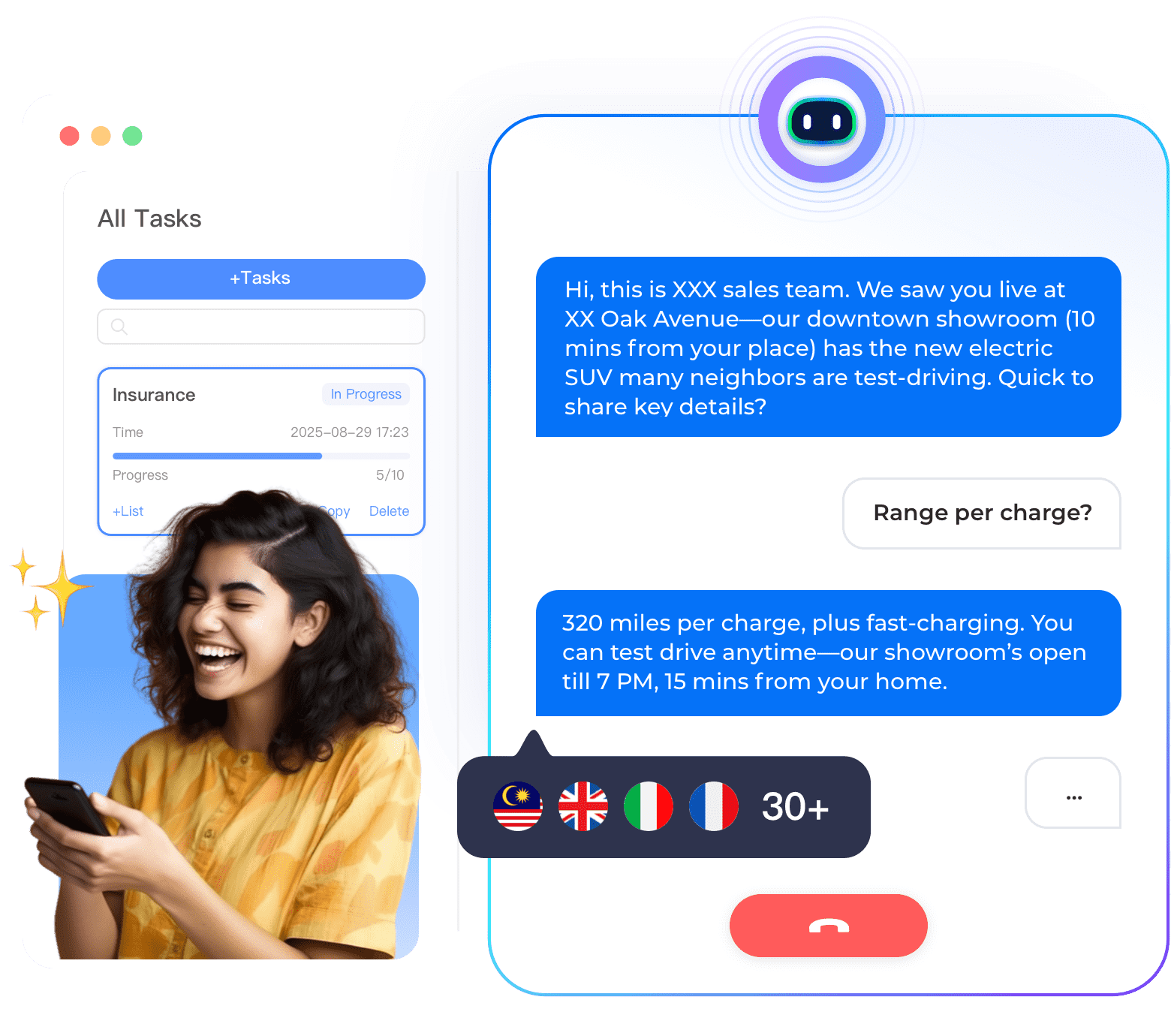
Instadesk’s VoiceBot platform offers a comprehensive visual orchestration environment specifically designed for telecom operators.It supports near-human multi-round voice conversations with accurate intent recognition powered by large language models.Operators can build custom outbound and inbound applications using pre-built templates,then deploy them across global markets with support for 30-plus languages.The platform also provides real-time analytics,allowing teams to monitor performance and make iterative improvements without technical intervention.

Key features for telecom operators include:
•Visual Flow Builder:Drag-and-drop interface to design call flows;no coding required.
•Telecom-Trained AI:Models understand industry terminology—data plans,roaming,throttling,outages.
•System Integration:Prebuilt connectors for billing systems,CRM,and network management tools.
•Multilingual Support:Serve diverse customer bases with real-time translation across 30+languages.
•Analytics Dashboard:Monitor call volume,intent accuracy,and escalation rates in real time.
•Seamless Escalation:Transfer to human agents with full conversation context when needed.
Case Study:Telecom Operator Deploys VoiceBot in 5 Days
A regional telecom operator with 2 million subscribers needed to handle a surge in billing inquiries after a system migration.Using Instadesk’s no-code platform:
•Deployment time:VoiceBot deployed in 5 days,compared to 8 weeks for traditional development.
•Call volume handled:Automated 40 percent of billing calls within the first week.
•Agent relief:Reduced call center volume by 35 percent,allowing agents to focus on complex issues.
•Customer satisfaction:First-call resolution improved by 25 percent.
Conclusion
No-code voice bot deployment is transforming how telecom operators manage customer interactions.By enabling business teams to design,launch,and optimize voice bots independently,it reduces costs,accelerates time-to-market,and improves service quality.With Instadesk’s VoiceBot platform,telecom companies can leverage visual orchestration,industry-trained AI,and deep system integration to deliver scalable,efficient,and highly personalized customer experiences without writing a single line of code.
Share This Article


Liyana
Master's Degree Bilingual Content Specialist
You may also like

Outbound Robot for Insurance Telemarketing:A Guide for Insurers
Insurance telemarketing involves high-volume outbound calls to prospects for policy sales,lead qualification,and appointment setting.An outbound robot—an AI-powered voicebot—automates these calls,engaging prospects in natural conversations,addressing objections,and scheduling follow-ups.Unlike human agents,who can only make a limited number of calls per day,outbound robots can handle thousands of calls simultaneously,reducing the cost per lead and improving conversion rates.This article explores how insurers can use outbound robots for telemarketing,their benefits over manual calling,and how Instadesk’s VoiceBot platform delivers compliant,effective outbound automation.

Voice Bot with Data Encryption:A Guide for Fintech Companies
Fintech companies handle sensitive customer data—account numbers,transaction histories,credit scores,and personal identifiers.A voice bot with data encryption ensures that all customer conversations and data exchanges are protected from unauthorized access.Unlike standard voice bots that may store or transmit data insecurely,encrypted voice bots use advanced encryption standards(AES)for data at rest and Transport Layer Security(TLS)for data in transit,meeting financial industry compliance requirements.This article explores the importance of encryption in voice bots,how encrypted voice bots differ from standard ones,and how Instadesk’s VoiceBot platform delivers bank-grade security for fintech applications.


VoiceBot Inbound Call: A Guide for Property Management Companies
Property management companies handle thousands of inbound calls from tenants,landlords,and vendors—including maintenance requests,rent inquiries,lease questions,and emergency reports.An inbound VoiceBot system automates these routine interactions,providing 24/7 service while reducing agent workload.Unlike traditional IVR menus that frustrate callers,AI-powered voicebots understand natural language,answer questions,and even create maintenance tickets automatically.This article explores how property management companies can leverage inbound voicebots,their advantages over traditional systems,and how Instadesk’s Inbound Voicebot platform delivers efficient,tenant-friendly automation.
Get Started in Minutes. Experience the Difference.