
How can AI support a scalable and stable global voice customer service system?
In many overseas markets, the telephone remains one of the most trusted and widely used customer service channels by customers. When customers require a quick response, clear explanation or compliance with procedures, voice communication remains irreplaceable. Meanwhile, as call volume continues to grow and multilingual services become the norm, traditional call centers are under increasing operational pressure.

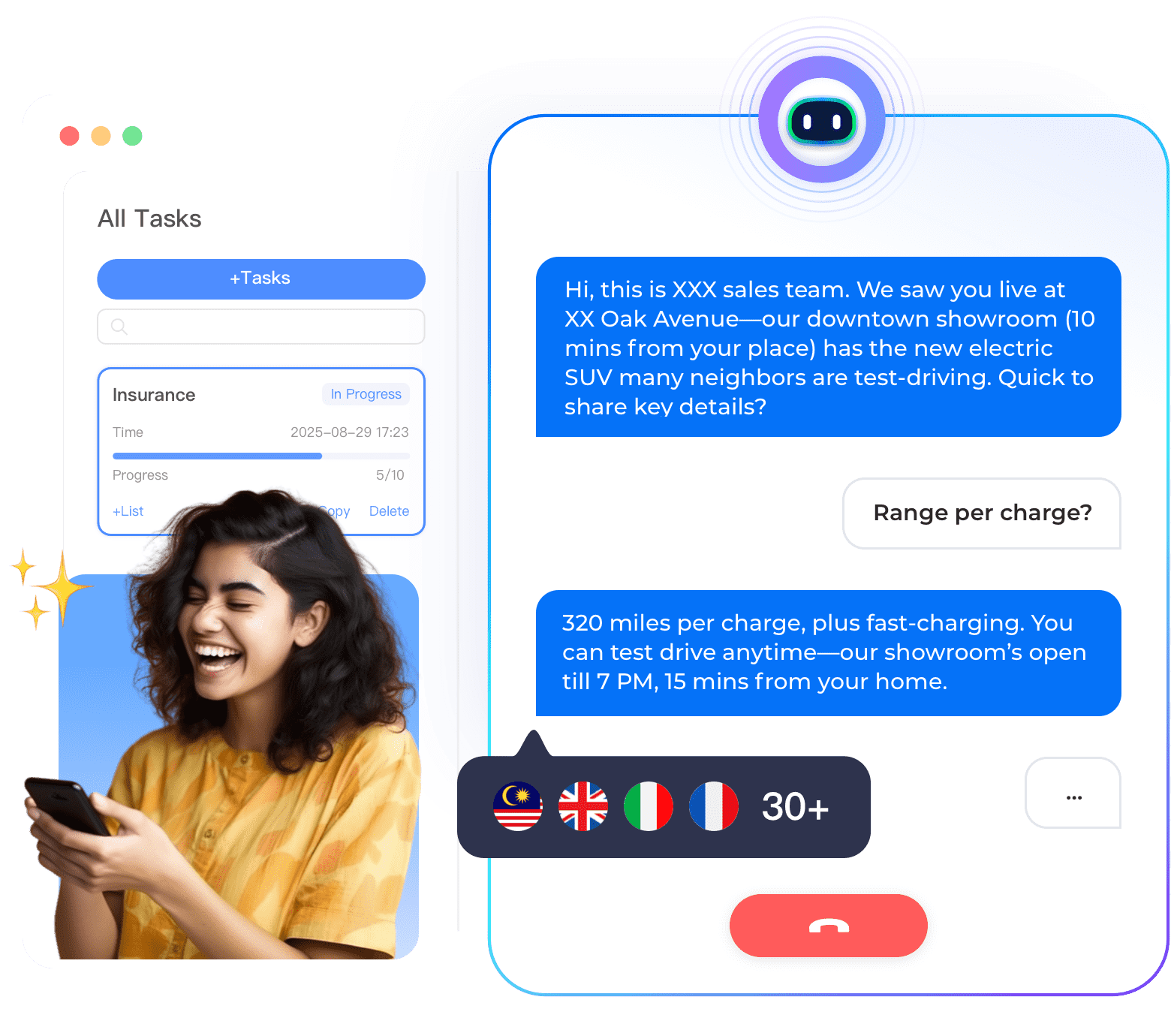
Customized intelligent voice robots are becoming a practical solution to these problems. By integrating speech recognition, natural language understanding and process automation, voice robots can efficiently handle a large number of incoming calls while maintaining consistency in service quality. This article will focus on the core capabilities, application scenarios and practical implementation methods of intelligent voice robots, and take Instadesk's intelligent training and voice capabilities as practical references.
I.The Role of Voice in the Modern Customer Service System
Despite the continuous development of digital channels such as online chat and social messaging, voice still holds an important position in the customer service system.
In industries such as finance, healthcare, telecommunications, and logistics, voice services remain an important approach to handling highly complex and highly compliant issues.
For cross-border enterprises, voice customer service is also an important channel for building trust. Direct communication can effectively alleviate customers' sense of uncertainty.
Therefore, voice services have not been replaced but need to evolve in a more efficient and intelligent direction.
II. Practical Challenges Faced by Traditional Call Centers
As the scale of services expands, traditional call centers are gradually revealing structural problems:
• Labor costs continue to rise
It is difficult to expand capacity during peak hours
• Multilingual and multi-regional management is complex
It is difficult to maintain consistent service quality
Relying solely on human labor is no longer sufficient to meet the efficiency and experience requirements of modern customer service.
III. What is Customized Intelligent Voice Robots?
Customized intelligent voice robots refer to the design and deployment of voice systems that are conversational, understandable and learnable based on the actual business scenarios of enterprises.
Compared with traditional IVR menus, intelligent voice robots can:
Understand natural language
• Supports multi-round conversations
• Interface with business systems
• Flexibly transfer workers according to the rules
The core of customization lies in "fitting the business" rather than applying a fixed template.
IV.How does AI support the intelligence of voice robots
Modern voice robots are typically composed of the following technologies:
• Speech Recognition (ASR) : Converting speech into text
• Semantic Understanding (NLU) : Identifying user intent and key information
• Dialogue Management: Control interaction logic and processes
• Speech Synthesis (TTS) : Output natural speech
These capabilities collectively support an experience that is closer to "real-person dialogue".
V. Core Capabilities of Intelligent Voice Robots
A mature voice robot system usually has:
1. High concurrent call processing capability
2. Multilingual recognition and response
3. Scenario-based process design
4. Intelligent to manual mechanism
5. Real-time monitoring and data analysis
These capabilities make voice services scalable and controllable.
VI.Intelligent Training and Continuous Optimization
Voice robots are not "once launched, permanently available".
The intelligent training capability of Instadesk is achieved through:
• Analyze call data
• Optimize intent recognition
• Adjust the logic of the script
Help voice robots continuously adapt to real user behavior and achieve long-term availability.
VII. Typical Application Scenarios
Intelligent voice robots are widely applied in:
• Customer consultation and information inquiry
• Appointment and reminder
• Order and logistics notifications
• Compliance verification
• Outbound call follow-up
Effectively release human seat resources.
VIII.Coordination with the Overall customer Service System
Voice robots are usually associated with:
• Work order system
• CRM
"Quality inspection system"
Work collaboratively to form a unified service loop.
In the Instadesk system, voice capabilities can be integrated with work order and quality inspection modules to enhance overall operational efficiency.
IX.Value for Different Roles
• To customers: Faster response and more stable experience
• For the customer service team: Reduced pressure and clearer collaboration
• For enterprises: Controllable costs and sustainable service expansion
Conclusion
In the globalized service environment, voice remains an irreplaceable core channel.
Customized intelligent voice robots offer enterprises a feasible path that takes into account efficiency, quality and scale.
Through AI technology and continuous training, solutions like Instadesk are helping enterprises reshape the voice customer service model and lay the foundation for long-term growth.
Tags
Share This Article


Issac
Omnichannel Digital Operations: Driving Traffic Growth & Deepening User Value
You may also like

Outbound Robot for Insurance Telemarketing:A Guide for Insurers
Insurance telemarketing involves high-volume outbound calls to prospects for policy sales,lead qualification,and appointment setting.An outbound robot—an AI-powered voicebot—automates these calls,engaging prospects in natural conversations,addressing objections,and scheduling follow-ups.Unlike human agents,who can only make a limited number of calls per day,outbound robots can handle thousands of calls simultaneously,reducing the cost per lead and improving conversion rates.This article explores how insurers can use outbound robots for telemarketing,their benefits over manual calling,and how Instadesk’s VoiceBot platform delivers compliant,effective outbound automation.


Voice Bot with Data Encryption:A Guide for Fintech Companies
Fintech companies handle sensitive customer data—account numbers,transaction histories,credit scores,and personal identifiers.A voice bot with data encryption ensures that all customer conversations and data exchanges are protected from unauthorized access.Unlike standard voice bots that may store or transmit data insecurely,encrypted voice bots use advanced encryption standards(AES)for data at rest and Transport Layer Security(TLS)for data in transit,meeting financial industry compliance requirements.This article explores the importance of encryption in voice bots,how encrypted voice bots differ from standard ones,and how Instadesk’s VoiceBot platform delivers bank-grade security for fintech applications.


VoiceBot Inbound Call: A Guide for Property Management Companies
Property management companies handle thousands of inbound calls from tenants,landlords,and vendors—including maintenance requests,rent inquiries,lease questions,and emergency reports.An inbound VoiceBot system automates these routine interactions,providing 24/7 service while reducing agent workload.Unlike traditional IVR menus that frustrate callers,AI-powered voicebots understand natural language,answer questions,and even create maintenance tickets automatically.This article explores how property management companies can leverage inbound voicebots,their advantages over traditional systems,and how Instadesk’s Inbound Voicebot platform delivers efficient,tenant-friendly automation.
Get Started in Minutes. Experience the Difference.