Future of Voice AI in Customer Service: How Intelligent Voicebots Are Transforming Business Operations
Over two decades ago, the first voice automation systems promised to revolutionize customer service. The reality fell short—clunky interfaces, frequent errors, and frustrating experiences left customers pressing "1" repeatedly, only to be routed into oblivion. Those early interactive voice response (IVR) systems offered a glimpse of what could be possible, but they remained eons away from the solutions businesses truly needed.
Today, that vision has finally arrived. Voice AI has matured from basic automation into a critical component of modern customer experience (CX), and intelligent voicebots are leading this transformation across industries like finance, healthcare, retail, and beyond.

Voicebots‘ Role in Customer Service Today
Despite the rise of digital-first interactions, voice remains indispensable. Industries with nuanced, high-stakes communication needs—banking, telecommunications, healthcare—continue to rely heavily on phone conversations. Yet misconceptions persist: many believe voice is outdated or too complex to implement effectively.
The truth? Today's AI voicebot solutions have achieved what early systems only dreamed of. Modern voicebots excel at automating straightforward tasks like routing and basic inquiries while tackling semi-complex operations like identity verification, appointment scheduling, and even sales conversations. The best-performing systems balance simplicity with efficiency, ensuring customers feel heard without compromising operational goals.
However, businesses must rethink voice not as a cost center but as a competitive differentiator. Companies that embrace intelligent voicebot AI solutions are discovering that voice technology can drive tangible business outcomes—from reducing operational costs to increasing conversion rates.
Key Trends Shaping Voicebot Adoption
1. Generative AI: Moving Beyond Scripted Interactions
Conversational AI has evolved from rigid menu trees to fluid dialogue. Powered by large language models, today's voice solutions interpret contextual cues—word choice, phrasing, tone—to deliver tailored responses in real time.
When a customer calls about an unexpected charge, the system immediately grasps intent, accesses relevant account history, and resolves the issue in one natural exchange. No transfers. No repetition. Just resolution.
This level of understanding resonates with modern consumers who expect effortless, intuitive interactions. Organizations deploying advanced conversational AI aren't just streamlining operations—they're building lasting relationships through consistently positive experiences.
2. Voice as Part of a Connected Journey
Customers rarely stick to one channel. They might start on mobile, switch to desktop, and pick up the phone when they need clarification. Modern voice systems recognize this reality.
A sophisticated solution might detect when capturing numbers is better done via text message, or recognize when a complex issue needs visual instructions— ing it to send helpful resources mid-conversation.
This flexibility puts customers in control. Companies connecting voice with other touchpoints eliminate friction that frustrates users and drives up operational costs.
3. Speed: The Voice Imperative
Nothing derails a conversation like an awkward pause. When customers speak, they expect immediate acknowledgment—delays break the interaction.
Recent processing advances have narrowed this gap dramatically. When someone checks order status, the system retrieves and delivers information almost instantly, maintaining natural flow. This matters more for voice than any other channel. People tolerate typing delays, but speaking creates an expectation of immediacy. Systems delivering on this front see stronger engagement and higher completion rates.
4. Voice Economics Are Flipping
Phone support once carried a heavy price tag. Companies treated every call as an expense to minimize, steering customers toward cheaper digital channels.
Intelligent voice automation changes this equation. As systems handle complex interactions, cost per call drops significantly. Businesses can now encourage calls where voice adds genuine value—a financial advisor inviting clients to discuss investments by phone, knowing costs are minimal.
This transforms voice from something to deflect into something to embrace. Organizations recognizing this shift early will define the next generation of customer engagement.
Strategic Approaches to Voicebot Implementation
1. Start Focused, Expand Strategically
Successful voice deployments follow a proven pattern: start small, then scale. Rather than automating everything at once, smart organizations target specific high-volume tasks—call routing, FAQ responses, basic authentication. These focused use cases deliver quick wins, building momentum and demonstrating clear ROI.
An e-commerce company might begin by automating order status inquiries. Once that foundation performs well, they expand into returns or complaints. Each successful addition builds on the last, creating compounding returns as automation rates climb and operational costs decline.
2. Balance Personalization With Practicality
Customers want efficiency without feeling like they're talking to a machine. Getting this right means designing experiences that feel personal without unnecessary complexity.
A bank's voice system might greet returning callers by name and reference recent account activity—creating immediate familiarity. But the system also needs to recognize its limitations. When conversations turn sensitive—loan denials, fraud concerns—the path to a human agent should be short and seamless. The goal isn't eliminating people; it's deploying automation where it adds value and knowing when to step back.
3. Connect Every Interaction
Voice doesn't exist in isolation. The customer calling support might have spent twenty minutes in your app earlier that day. They expect that context to carry over.
Effective systems maintain continuity across channels. Someone starting a return via web chat then switching to a phone call shouldn't repeat themselves. A properly integrated solution preserves everything discussed. Fragmented approaches force customers to restart constantly, creating frustration that erodes satisfaction. The organizations getting this right treat every interaction as one continuous conversation.
4. Build for What's Next
Conversational AI evolves fast—today's cutting-edge feels dated within eighteen months. This reality shapes smart technology decisions.
Forward-thinking companies prioritize flexibility. They choose platforms with open architectures that accommodate emerging capabilities, avoiding proprietary dead ends. They evaluate partners on innovation track records, not just current features. And they regularly reassess their approach based on shifting customer expectations.
The principle: deliver value today while preserving freedom to adapt tomorrow. Organizations mastering this balance stay ahead of the curve rather than constantly playing catch-up.
The Instadesk Approach: Leading the Voicebot Revolution
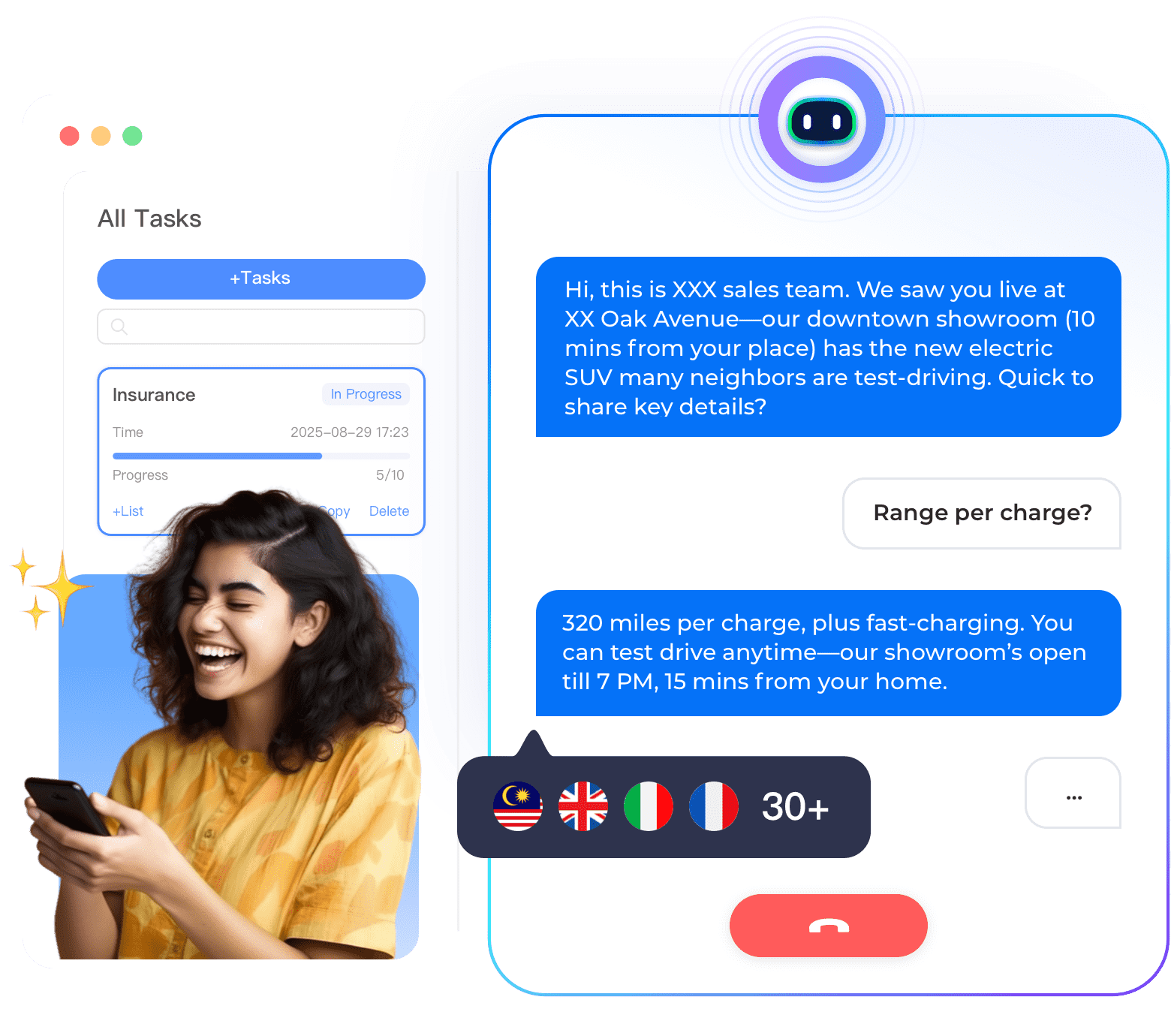
At Instadesk, we're advancing voicebot technology through practical innovation. Our platform combines reduced latency, intuitive design, and seamless CX integration—all built on large-model architecture that delivers natural conversations across Malay, English, and over 30 languages while adapting to local communication patterns.
• Multi-Language Automated Outbound Calling
• Zero-Code Visual Orchestration
• Emotionally Intelligent Conversations
• Enterprise-Grade Security
Preparing for a Voice-Driven Future
Voicebot AI is no longer a futuristic concept—it's here, transforming how businesses interact with customers. As costs drop and capabilities rise, we're witnessing a fundamental shift in how brands approach voice as part of their CX strategy.
The trends we've explored—generative AI personalization, multimodal integration, reduced latency, economic transformation, and conversational intelligence—represent steps toward a future where voicebots become transformative forces in customer service. Businesses acting now to embrace these innovations position themselves as leaders. Those lagging risk being left in the digital dust.
By focusing on personalization, integration, speed, cost-efficiency, and intelligence, voicebot technology is poised to revolutionize company-customer interactions. The only question is: will your business lead the way or play catch-up?
Tags
Share This Article



Instadesk
Instadesk official
You may also like

Outbound Robot for Insurance Telemarketing:A Guide for Insurers
Insurance telemarketing involves high-volume outbound calls to prospects for policy sales,lead qualification,and appointment setting.An outbound robot—an AI-powered voicebot—automates these calls,engaging prospects in natural conversations,addressing objections,and scheduling follow-ups.Unlike human agents,who can only make a limited number of calls per day,outbound robots can handle thousands of calls simultaneously,reducing the cost per lead and improving conversion rates.This article explores how insurers can use outbound robots for telemarketing,their benefits over manual calling,and how Instadesk’s VoiceBot platform delivers compliant,effective outbound automation.


Voice Bot with Data Encryption:A Guide for Fintech Companies
Fintech companies handle sensitive customer data—account numbers,transaction histories,credit scores,and personal identifiers.A voice bot with data encryption ensures that all customer conversations and data exchanges are protected from unauthorized access.Unlike standard voice bots that may store or transmit data insecurely,encrypted voice bots use advanced encryption standards(AES)for data at rest and Transport Layer Security(TLS)for data in transit,meeting financial industry compliance requirements.This article explores the importance of encryption in voice bots,how encrypted voice bots differ from standard ones,and how Instadesk’s VoiceBot platform delivers bank-grade security for fintech applications.


VoiceBot Inbound Call: A Guide for Property Management Companies
Property management companies handle thousands of inbound calls from tenants,landlords,and vendors—including maintenance requests,rent inquiries,lease questions,and emergency reports.An inbound VoiceBot system automates these routine interactions,providing 24/7 service while reducing agent workload.Unlike traditional IVR menus that frustrate callers,AI-powered voicebots understand natural language,answer questions,and even create maintenance tickets automatically.This article explores how property management companies can leverage inbound voicebots,their advantages over traditional systems,and how Instadesk’s Inbound Voicebot platform delivers efficient,tenant-friendly automation.
Get Started in Minutes. Experience the Difference.